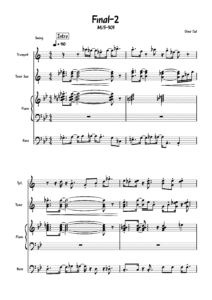
The piece has a soli section, 2 motives with an intro, outro and developments . Each part builds on
each other. Harmonic tension and resolution are used to create a narrative.
Intro:
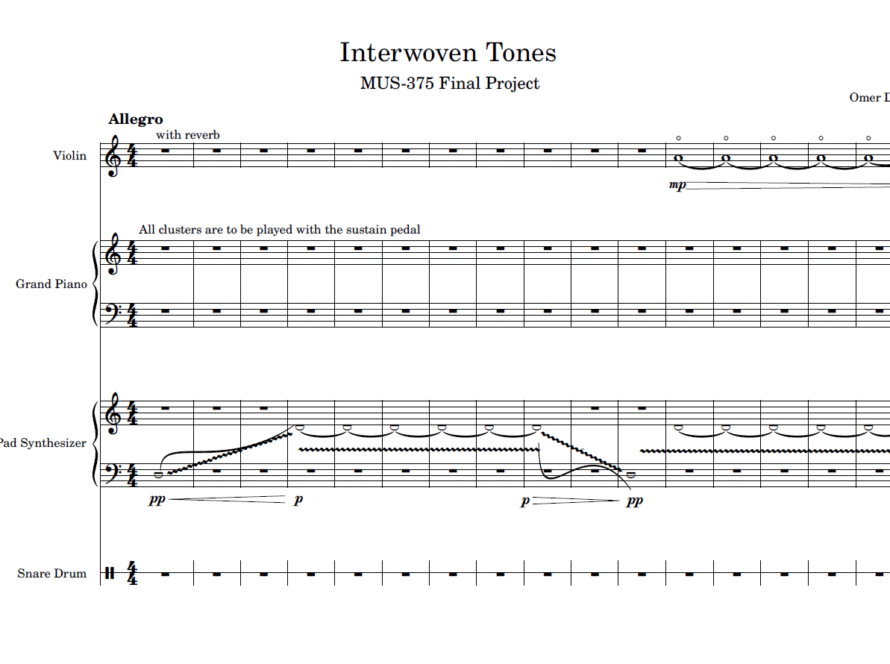
Gbm11 | Em7-add11 | A7+5-9 | Dm9 | Dm6/C | Dm6/F
the first chord gives a minor and mysterious tone. Em7add11 adds a suspended quality. A7+5-9
provides tension and Dm9, Dm6/C, Dm6/F create a complex harmonic foundation.
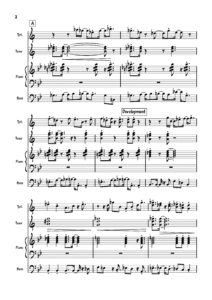
Motive A:
Gbm11 | Em7-add11 | Gbm11 | Em7-add11
The first two chords at the beginning are repeated and the motif is introduced.
Development of Motive A
Bbm6 | Fmaj7 | Bbm6 | Fmaj7
Bbm6 and Fmaj7 chords come in to add new harmonic colors. The melodic development comes up
with different ideas and uses interval changes.
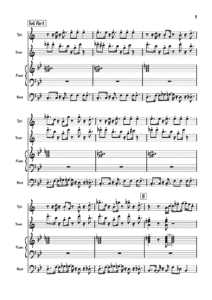
Soli Section:
Dm6/C | Dm9 | Dm6/C | Dm9 | Dm6/C | Dm9 | Dm6/C | Dm9
Two-Part Harmony: trumpet and tenor saxophone interact and create a texture. It also provides
rhythmic complexity and syncopations call and response patterns.
Motive B:
Bbm6 | Fmaj7 | Bbm6 | Fmaj7
Bbm6 and Fmaj7 provide a harmonic opposite to motif A. The melody is introduced.
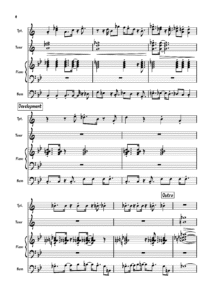
Development of Motive B
Dm6/C | Fmaj11 | Dm6/C | Fmaj11
Dm6/C and Fmaj11 blend extended harmonies, creating complexity. Motive B changes harmonically
but also includes elements of motive A for thematic unity.
Outro:
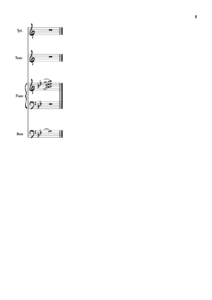
Gbm11 | Gbm11
There is a sense of closure and resolution by returning to the beginning chord.